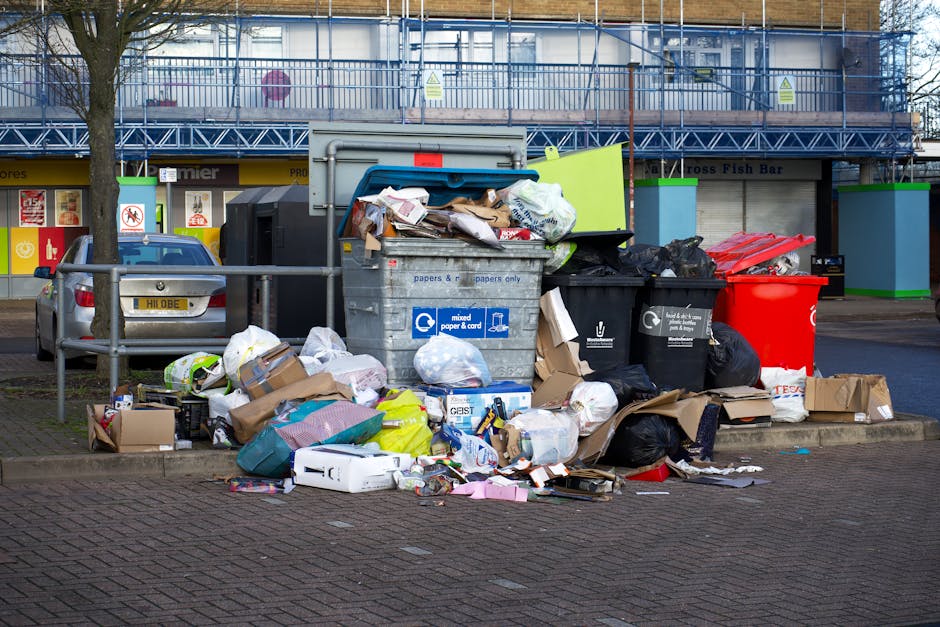
Rubbish removal near West Norwood Station made simple

If you are trying to clear unwanted junk without turning the day into a logistical headache, you are in the right place. Rubbish removal near West Norwood Station made simple is really about making a messy task feel organised, quick, and properly handled. Maybe you have old furniture blocking a hallway, bags of mixed waste after a weekend clear-out, or builder's rubble that needs shifting before the neighbours start wondering what is going on. Whatever the situation, the right approach saves time, stress, and often a fair bit of money too.
This guide breaks down how local rubbish collection works, when it makes sense to choose a man and van service or skip hire, what to avoid putting out, and how to plan a clearance that is efficient from start to finish. We will keep it practical, local, and straight to the point. No fluff, promise.
Why Rubbish removal near West Norwood Station made simple Matters
Rubbish removal sounds straightforward until you are staring at a pile of mixed waste and thinking, where does any of this actually go? Near West Norwood Station, that question comes up a lot because local homes, flats, shops, and building projects all create different kinds of waste. A single solution rarely fits every job, and that is where people get stuck.
Making the process simple matters for three reasons. First, it reduces disruption. If you live near a busy station or on a tighter residential street, you do not want waste hanging around for days. Second, it helps you choose the right disposal method. A quick flat clearance, for example, is very different from a bathroom rip-out or a garden overhaul. Third, it helps you avoid avoidable mistakes, like overfilling bags, mixing restricted items in with general rubbish, or choosing a vehicle size that is far too small.
There is also a trust element. Reputable waste handling should feel tidy, transparent, and predictable. You should know what can be taken, what cannot, how it will be moved, and what happens after collection. That reassurance is not a luxury. It is part of the service. To be fair, when rubbish is removed properly, you notice the difference almost immediately. The space feels lighter. Quieter, even.
If you are comparing solutions, it can help to look at broader service pages such as rubbish removal, man and van, or skip hire to see which approach suits your job best. Each one serves a slightly different purpose, and that distinction matters more than people think.
How Rubbish removal near West Norwood Station made simple Works
At its simplest, rubbish removal is the process of collecting unwanted items, loading them safely, and taking them for disposal, reuse, or recycling through the correct channels. In practice, there are a few different ways this may happen, and the best choice depends on how much waste you have, what type it is, and whether you can get it ready in advance.
A typical local collection starts with identifying the waste. That means separating general household rubbish from bulky items, builders' waste, green waste, electrical items, or anything potentially hazardous. The clearer you are at the start, the smoother the pickup will be. A decent provider will usually ask a few simple questions: how much waste is involved, what it includes, whether access is easy, and whether you need same-day help or a pre-booked slot.
From there, the team either arrives to load the waste from a driveway, front garden, office, or kerbside location, or delivers a container such as a skip if that is the better fit. If access is awkward or the waste needs to be removed quickly without leaving a container on site, a wait-and-load style option can be a neat middle ground. You keep the clear-up moving and do not end up with a skip sitting in the road. Handy, really.
For heavier or trickier loads, other specialist pages such as grab hire services, wait and load skip hire, and same day skip hire can help you understand which method fits your timeline and access conditions.
The final stage is disposal and sorting. Good waste handlers separate recyclables, route suitable materials for recovery, and deal carefully with items that need special handling. That is one reason why asking, "Can this all just go together?" is not always the right question. Often it cannot. And honestly, that is a good thing.
Key Benefits and Practical Advantages
The biggest benefit is simple: you get your space back without having to coordinate every stage yourself. But there are a few more practical advantages worth spelling out.
- Less lifting and less hassle: One crew can remove bulky or awkward items that would be a nightmare to shift on your own.
- Better time control: You can work around a move-out date, renovation schedule, or end-of-tenancy deadline.
- Cleaner finish: Professional removal often leaves the space ready for its next use sooner.
- Smarter disposal: Waste can be sorted more effectively than a casual DIY clear-out usually allows.
- Useful for mixed loads: Rubbish removal is often easier when you have a blend of furniture, bags, and loose items.
There is also a quieter advantage: peace of mind. If you have ever tried to clear a room, lift a sofa, and squeeze a pile of broken stuff into a car in one afternoon, you will know how quickly the job can become frustrating. Then there is the smell of damp cardboard, the dust, the endless trips up and down stairs. Not glamorous. Not even close.
For many people, the value is not just in removal itself. It is in not having to think about it again. If you want a service that feels more tailored, options like house clearance, garage and loft clearance, or office clearance may be more appropriate than a general collection, depending on the setting.
Who This Is For and When It Makes Sense
This kind of service suits far more people than you might expect. It is not only for major renovations or full property clearances. In fact, many of the most common jobs are smaller, more ordinary, and just annoying enough to keep being put off.
It makes sense if you are:
- clearing a flat, house, or shared property near West Norwood Station
- getting rid of unwanted furniture before a move
- dealing with post-refurbishment mess
- tidying a garden after a seasonal cut-back
- removing mixed household clutter from a loft, garage, or spare room
- running a local shop or office that needs regular waste removal
- handling light construction waste, packaging, or debris
It can also be a sensible choice if access is tight. Streets close to transport hubs often have parking quirks, foot traffic, or limited space for loading. A service that comes prepared can save you from a lot of back-and-forth. If you need something particularly quick, same day skip hire or a flexible loading option may be worth considering, though the right answer depends on the waste type and how fast the clearance must happen.
A small but useful distinction: if you have waste scattered across a property, with furniture, white goods, and general clutter all mixed together, a removal team can often be more practical than a skip. If the waste is heavy, uniform, and generated in one place, a skip may be better. It is not a moral decision. It is just logistics.
Step-by-Step Guidance
Here is a clear way to approach the job so it does not become chaotic halfway through.
- Identify the waste. Walk through the space and decide what is going, what stays, and what might need special handling.
- Separate restricted items. Put aside anything that may need specialist disposal, such as fridges, mattresses, or sensitive paperwork.
- Estimate volume honestly. A lot of people underestimate this. A couple of bags can quickly become a van load if you keep finding more.
- Check access. Think about stairs, narrow hallways, parking, and whether the crew can reach the waste easily.
- Choose the right service. General rubbish removal, skip hire, grab hire, or wait-and-load all suit different setups.
- Ask about recycling and sorting. It is sensible to know how your waste will be handled after collection.
- Book with enough detail. Give a clear description, especially if you have mixed waste or awkward furniture.
- Prepare the load point. Stack items safely and keep pathways clear where possible.
- Do a final check. Before collection, make sure nothing important has accidentally been added to the pile. Happens more than people admit.
If you are unsure what can be included, the guidance on what can go in a skip is a useful reference point even if you ultimately choose a different service. And if your clearance includes one-off bulky items, pages like fridge and appliance removal or mattress and sofa disposal can help you avoid guesswork.
Expert Tips for Better Results
A good clearance usually comes down to a handful of small decisions. Get those right and the rest is easier.
Tip 1: sort by weight and awkwardness, not just item type. A pile of light bags is one thing. A broken wardrobe and a set of damp shelves are another. Grouping heavy, brittle, or bulky items together helps the crew plan the lift.
Tip 2: keep pathways open. This sounds obvious, but clutter has a way of spreading. A clear hall or doorway speeds up the job and reduces the risk of scuffed walls or stubbed toes. Not the most exciting tip, but one of the most useful.
Tip 3: be honest about hidden waste. If there is rubble under the boards, old timber in the shed, or bags in a back yard, mention it up front. You do not want a nice tidy quote turning into a surprise half-hour later.
Tip 4: think about timing. If you are near the station and access is easier early in the day, book accordingly. Morning slots can be calmer, and sometimes that matters more than people realise.
Tip 5: use the right specialist service for the job. Builders' debris, demolition waste, or heavy site waste may be better matched with builders waste removal, construction waste disposal, or demolition waste removal. That keeps the process efficient and avoids mismatch.
When in doubt, ask one clear question: "What is the easiest and safest way to move this specific waste?" That one question cuts through a lot of noise.
Common Mistakes to Avoid
Most problems are avoidable. The tricky bit is that they often seem small at first.
- Mixing everything together: General waste, hazardous items, and recycling-friendly materials should not all be treated the same way.
- Underestimating volume: It is the classic one. A neat pile becomes a much bigger load once everything is gathered properly.
- Forgetting access issues: A service can be efficient on paper and awkward on-site if the route is blocked or parking is unrealistic.
- Choosing the wrong method: A skip is not always best, and a van collection is not always enough.
- Leaving sorting until collection day: That creates delays and often extra stress.
- Ignoring item restrictions: Some things need specialist handling, and trying to shortcut that is a false economy.
One common mistake is treating "rubbish removal" as a single, universal solution. It is not. A family moving out of a terrace house, a cafe clearing back-of-house waste, and a contractor dealing with broken masonry all need different handling. Slightly different, anyway. That nuance matters.
Tools, Resources and Recommendations
You do not need a shed full of equipment to plan a good clearance. A few simple tools help a lot.
- Tape measure: Useful for checking whether furniture can be moved in one piece.
- Heavy-duty gloves: Helpful for sorting sharp or dusty waste safely.
- Marker pens and sacks: Good for separating keep, donate, recycle, and remove piles.
- Phone photos: Surprisingly useful when requesting a quote or comparing options.
- Notebook or checklist: Old-fashioned, but effective.
For service planning, the most practical resources are the specialist pages themselves. If you are deciding between methods, take a look at skip sizes and prices, skip permits, and pricing and quotes. If privacy matters for paperwork or office waste, confidential shredding is the cleaner route. If you need an enclosed option for security or weather protection, enclosed and lockable skip hire may be a better fit.
For more formal reassurance around how services are run, you can also review insurance and safety, health and safety policy, payment and security, and recycling and sustainability. These pages help build confidence without adding noise.
Law, Compliance, Standards, or Best Practice
Waste handling in the UK is not just a matter of moving things out of sight. It needs to be managed responsibly, and that is where good practice matters. You do not need to become an expert in regulations, but you should expect any provider to act carefully, separate unsuitable items, and dispose of waste through proper channels.
As a general rule, you should be cautious with anything that could be hazardous, contaminated, sharp, flammable, or electrically risky. That includes some appliances, chemicals, paints, solvents, and certain construction materials. If you are unsure, ask before loading. That question is never annoying; it is sensible.
There is also a duty of care element in everyday waste management. In plain English, that means waste should be transferred to a legitimate operator and handled responsibly. It is wise to choose a company that is clear about safety, insurance, security, and recycling practices. If a service is vague about what happens after collection, that is a small red flag. Not a dramatic one, just enough to make you pause.
For site work, commercial clearances, or larger refurbishment jobs, specialist services such as site clearance, construction waste clearance, and muck away services can be better aligned with health and safety expectations because they are built around larger, more controlled waste movements.
Best practice is usually simple: label waste clearly, separate problem items, keep access safe, and choose a method that matches the actual job rather than the most convenient headline price.
Options, Methods, or Comparison Table
Different waste removal methods suit different situations. Here is a straightforward comparison to help you decide.
| Method | Best for | Pros | Watch out for |
|---|---|---|---|
| Rubbish removal / man and van | Mixed household waste, bulky items, quick clearances | Flexible, fast, minimal effort from you | May be less suitable for very heavy or high-volume rubble |
| Skip hire | Refurbishment waste, ongoing projects, heavier loads | Good capacity, useful for staged loading | May need a permit or driveway space |
| Wait and load | Quick loads where leaving a skip is difficult | No skip left on site, useful in tighter streets | Requires the waste to be ready quickly |
| Grab hire | Large, loose, heavy waste in one place | Efficient for bulky loads, less manual handling | Needs access for the vehicle and a suitable loading area |
If you are dealing with trade waste or recurring commercial waste, it may be worth looking at commercial skip hire or builders skip hire rather than trying to force everything into a one-off domestic-style arrangement. The right tool for the job, as people say. And annoyingly, they are right.
Case Study or Real-World Example
Picture a small two-bedroom flat not far from West Norwood Station. The residents are moving out at the end of the month, and the place has gathered the usual moving-day debris: an old sofa, a mattress, broken storage boxes, a pile of clothes hangers, a half-dismantled wardrobe, and several bags of mixed clutter from the cupboard under the stairs. Nothing dangerous, but plenty awkward.
At first glance, it looks like a simple "just take the lot" job. But once you look closer, the mix of items matters. The sofa and mattress are bulky, the wardrobe panels are awkward, and the smaller bags include odds and ends that need sorting. A flexible rubbish removal service is the cleaner option here because it removes multiple waste types in one visit without requiring the customer to manage a skip or make repeated trips.
Now compare that with a small bathroom renovation nearby. The waste is heavier, more uniform, and generated over a few days. In that case, skip hire or builders waste removal may be a better fit. Same area, same general problem, different solution. That is the real lesson.
In both situations, the winning move is to plan the waste route before the pile becomes unmanageable. A little forethought in the morning can save you a noisy, stressful evening later on. You will thank yourself. Probably while making tea and looking at a suddenly empty room.
Practical Checklist
Use this quick checklist before booking anything:
- Have I listed every item that needs removing?
- Do any items need specialist disposal?
- Is the waste mixed, bulky, heavy, or loose?
- Is there good access for a van, skip, or grab vehicle?
- Do I need same-day collection or can I book ahead?
- Would skip hire, wait and load, or rubbish removal suit the job best?
- Have I separated anything I want to keep, donate, or recycle?
- Do I need to ask about permits, parking, or loading restrictions?
- Have I checked whether the provider offers recycling-focused disposal?
- Is the booking information accurate and complete?
If you can answer those questions cleanly, you are already ahead of most people at the start of a clearance. Simple, but effective.
Get a free quote today and see how much you can save.
Conclusion
Rubbish removal near West Norwood Station does not need to be complicated. Once you match the waste to the right method, the whole process becomes much easier to manage. The main things to remember are straightforward: know what you are clearing, choose the right service, be honest about access and volume, and avoid mixing in items that need special handling.
That approach keeps the job calm, efficient, and far less stressful than a rushed last-minute clear-out. Whether you need a one-off collection, support with bulky household items, or a more structured waste solution for a project, the simplest answer is usually the one that fits the real problem properly.
And honestly, that is what most people want at the end of the day: less clutter, less faff, and a space that feels usable again. A fresh start never looks bad, especially when the rubbish is gone.
Frequently Asked Questions
What is the easiest way to arrange rubbish removal near West Norwood Station?
The easiest way is to work out what you need removed, check access, and choose the method that fits the load. For mixed household waste or bulky items, a rubbish removal or man and van service is often the simplest.
Is rubbish removal better than skip hire for a flat near the station?
Often yes, especially if parking is limited or you do not want a skip left outside. If the waste is heavy, continuous, or generated over several days, skip hire may still be the better option.
Can I include furniture in a rubbish removal collection?
Usually, yes. Sofas, tables, chairs, and wardrobes are common items for removal, although large or awkward pieces should be mentioned when booking so the crew can plan properly.
What items need special handling?
Things like fridges, some electrical items, paints, chemicals, and other potentially hazardous materials may need specialist disposal. If you are unsure, ask before mixing them in with general waste.
How do I know whether I need a permit?
Permits are usually more relevant to skip hire placed on public land or where parking and placement rules apply. If you are using a van collection, that may not be necessary, but access and parking still need to be considered.
Is same-day rubbish removal available?
Sometimes it is, depending on availability and the size of the job. If speed matters, a same-day option can be useful, but it helps to give clear details early so the provider can confirm what is realistic.
What is the difference between wait and load and normal rubbish removal?
Wait and load means the vehicle waits while the waste is loaded quickly, then leaves. Normal rubbish removal may involve a broader collection arrangement, often with more flexibility around access and loading time.
How much waste can I put out?
That depends on the service and vehicle capacity. It is better to describe the load honestly, perhaps with photos, rather than trying to guess. A neat pile on the pavement can still be more than it looks.
Can builders' rubble be taken with general rubbish?
Sometimes, but not always. Heavy builders' waste is often better handled through specialist services such as builders waste removal or construction waste disposal because the loading and sorting requirements can be different.
What should I do with confidential papers?
Confidential papers are best handled separately through a shredding service. That keeps sensitive information out of mixed waste and gives you a cleaner, more secure process.
Will my rubbish be recycled?
Recycling depends on the material and the service provider's process, but responsible waste handling should always aim to recover suitable materials where possible. It is sensible to ask how recycling is handled before you book.
How do I prepare before collection day?
Sort the waste, clear access routes, set aside restricted items, and make sure the collection point is easy to reach. A few minutes of preparation can make a big difference once the crew arrives.
What if I am not sure which service I need?
That is normal. Most people are not. Compare rubbish removal, skip hire, grab hire, and wait and load based on access, volume, and waste type. If you still feel unsure, start by gathering photos and a short description so you can make a more informed decision.
Can I book online?
Yes, in many cases you can use book online to get started quickly. It is a handy option when you already know the kind of waste you need removed.